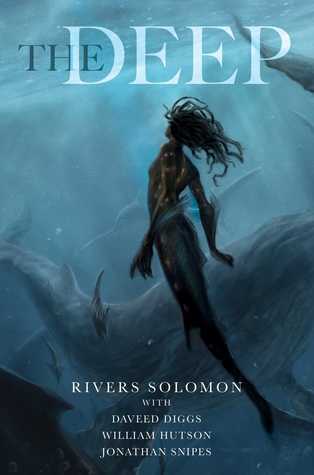
The Deep by Rivers Solomon, with Daveed Diggs, William Hutson and James Snipes
Synopsis: The water-breathing descendants of African slave women tossed overboard have built their own underwater society—and must reclaim the memories of their past to shape their future in this brilliantly imaginative novella inspired by the Hugo Award nominated song “The Deep” from Daveed Diggs’ rap group Clipping.
Yetu holds the memories for her people—water-dwelling descendants of pregnant African slave women thrown overboard by slave owners—who live idyllic lives in the deep. Their past, too traumatic to be remembered regularly, is forgotten by everyone, save one—the historian. This demanding role has been bestowed on Yetu.
Yetu remembers for everyone, and the memories, painful and wonderful, traumatic and terrible and miraculous, are destroying her. And so, she flees to the surface, escaping the memories, the expectations, and the responsibilities—and discovers a world her people left behind long ago.
Yetu will learn more than she ever expected to about her own past—and about the future of her people. If they are all to survive, they’ll need to reclaim the memories, reclaim their identity—and own who they really are.
Inspired by a song produced by the rap group Clipping for the This American Life episode “We Are In The Future,” The Deep is vividly original and uniquely affecting.
Book Review:
Among the selection of books I read a few months ago for the Trans Rights Readathon, I picked up “The Deep.” It had been on my TBR for a while, but I just didn’t get around to reading it. However, I am so glad that I finally did. Before diving into the review, I want to mention some trigger warnings for the book. Readers interested in this book should note that the themes include suicide attempt, suicidal ideations, violence, pregnancy, depictions of death, dying, and slavery.
Diving into the depths of “The Deep” by Rivers Solomon, I was swept away by a tide of emotions, captivated by its profound exploration of identity and memory. Solomon’s work is a tour de force of speculative fiction, immersing readers in a world where the echoes of the past reverberate through the present. At its heart lies the enigmatic figure of Yetu, burdened with the weight of her people’s history, yet yearning for liberation.
Yetu’s character evolves significantly throughout the story. By spending time away from her people and stranded in a shallow pond near the surface among human beings, she experiences life disconnected from the memories of her ancestors and the accompanying painful emotions. During this time, Yetu begins to connect with her own emotions. However, she also realizes that she misses those memories and understands the risk she has imposed on her people by leaving them alone with the remembering pod.
Through Solomon’s evocative prose, readers are transported to a realm where the boundaries between reality and myth blur, offering a poignant reflection on the enduring legacy of trauma. As Yetu grapples with the burden of remembrance, her journey becomes a testament to the resilience of the human spirit.
The main themes that stood out to me in the book include community, sense of self, found family, history and memories surviving over time within selected individuals and even items of the past. But the strongest theme of all was identity.
While the pacing may be slow at times, and the narrative veers into darkness, Solomon’s masterful storytelling ensures that “The Deep” remains a compelling and thought-provoking read. Her exploration of themes such as longing, belonging, and the quest for freedom resonates long after the final page is turned.
The book felt impactful to me on a personal level as a woman of African descent. Within the African American community, there is a sense of community and a collective awareness of Black trauma and pain. As a reluctant “manager” of my family, I understood how Yetu felt that her life was not her own because she was the keeper of all the memories of their ancestors. I, too, feel the burden and weight of all the responsibilities of my family because too often they come to me instead of doing things for themselves.
In conclusion, “The Deep” is a triumph of storytelling, a haunting exploration of the human condition that leaves an indelible mark on the soul. Solomon’s narrative prowess shines through, offering a glimpse into a world where hope and despair collide in a symphony of emotions. Yes, I would recommend this book because it is well-written, magical, explorative, self-aware, dynamic, and creative. The story will stay with you.
How do you think the themes of identity and memory explored in ‘The Deep’ resonate with your own experiences or the collective history of your community?
Be sure to check out my posts on helping Congo and Palestinian families.
Until the next post,
Gia.
 G. Jacks Writes (About Everything)
You must be logged in to post a comment.