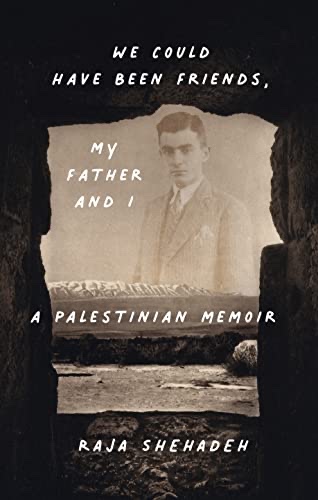
We Could Have Been Friends, My Father and I: A Palestinian Memoir by Raja Shehadeh

My Book Thoughts:

Diving into My Father and I Could Have Been Friends: A Palestinian Memoir by Raja Shehadeh reveals a narrative that intricately intertwines the lives of the author and his father, Aziz. This memoir serves not only as a heartfelt homage to paternal bonds but also as an unraveling of the rich tapestry of Palestinian history.

Raja’s evocative storytelling draws poignant parallels between himself and his father, Aziz. The vivid descriptions of Aziz’s life, motivations, and unwavering commitment to the Palestinian cause paint a compelling portrait of an underdog who emerges as a hero. Despite Aziz’s unyielding efforts, his unresolved assassination and the Israeli government’s reluctance to investigate cast a lingering shadow of injustice over the narrative.

The denial of access to the case file, justified under the guise of “privacy and information secrecy,” hints at a more disturbing truth—the possibility that those in power know the killer’s identity, potentially implicating high-ranking officials. This revelation fuels a sense of frustration, echoing the broader theme of oppression faced by Aziz and his human rights activism, particularly post-Nakba.

Raja adeptly navigates the complexities of his father’s life, portraying him not only as a dedicated human rights advocate but also as a mentor and guide in law. The exploration of the stark generational differences between Raja and Aziz, initially perceived as indifference, gradually transforms into a bittersweet connection as Raja delves deeper into his father’s legacy.

The book unfolds the internal struggles within the Shehadeh family, reflecting broader societal shifts in Palestine. Raja’s depiction of his father’s stoic demeanor and unyielding pursuit of justice becomes a lens through which the political landscape and the challenges faced by Palestinians are viewed.

As the narrative progresses, Raja’s commitment to preserving his father’s legacy becomes increasingly apparent. The exploration of Aziz’s notes and unpublished articles provides profound insights into the Nakba and the tragic decisions that led to the illegal occupation of Palestine. The involvement of countries like the United States, Britain, and France, coupled with the betrayal of Arab states, adds a layer of political intrigue and anger that intensifies the gravity of the situation.

The memoir fearlessly exposes the unsettling truth about international complicity in the atrocities committed against the Palestinian people. Learning about the United States supplying weapons to Israeli colonizers and seeking Arab assistance in suppressing Palestinian resistance is a gut-wrenching revelation that elicits disgust and raises questions about the ongoing consequences of such actions.

While recounting Aziz’s life, from his upbringing to his career, the memoir offers glimpses of normalcy amid the turmoil. However, it is not without its criticisms, particularly regarding the depiction of women in Aziz’s life and Raja’s family. Acknowledging these women may not have been directly involved in the legal system, it seems unfair that their opinions and political views are overlooked, highlighting the broader issue of sexism.

Moreover, the tragedy of displacement and the loss of homes, wealth, citizenship, and generational history resonate deeply. The Nakba, a catastrophic event that forcibly uprooted Palestinians, becomes an unthinkable reality, underscoring the harsh consequences of political maneuvering and power struggles.

One of the most powerful aspects of the memoir is the parallel drawn between Raja and Aziz’s commitment to human rights. The title, “We could have been friends, my father and I,” takes on profound meaning as the narrative unfolds. Despite differing perspectives and generations, the shared values and goals emerge as a testament to the enduring legacy of Aziz.

While reflecting on the past, Raja grapples with the political machinations that have marred Palestinian history. Furthermore, the memoir sheds light on the plotting of powerful nations and their role in destabilizing Palestine, perpetuating a cycle of suffering that continues to this day.

Raja wrestles with the hindsight of these events, acknowledging the difficulty of foreseeing such monumental challenges. The Palestinian people, left in the dark, were blindsided by political schemes and land grabs that altered the course of their history.

In conclusion, My Father and I Could Have Been Friends is a compelling exploration of familial bonds, political upheaval, and the enduring quest for justice. Raja Shehadeh’s masterful storytelling not only pays homage to his father but serves as a poignant reminder of the ongoing struggles faced by the Palestinian people. As readers traverse the pages of this memoir, they are confronted with the harsh realities of injustice, political betrayal, and the resilient spirit that persists even in the face of seemingly insurmountable challenges.
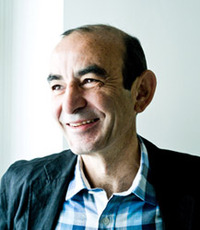
About the Author: Raja Shehadeh is the author of A Rift in Time, When the Bulbul Stopped Singing, Strangers in the House, described by the Economist as “distinctive and truly impressive,” and Palestinian Walks, for which he won the 2008 Orwell Prize. Shehadeh trained as a barrister in London and is a founder of the human rights organization Al-Haq. He blogs regularly for the International Herald Tribune/New York Times and lives in Ramallah, on the West Bank.

To quote Plestia from an Aljazeera interview: https://www.tiktok.com/@aljazeeraenglish/video/7315156081012002091

“We are not numbers; we are people. We have dreams…I just hope people will see us as humans. [And] I hope that they will understand that we’re resilient and we are patient because we don’t have any other option. But it’s not like Palestinians are built for wars and aggression. No, we’re humans. We love life and we want to live in peace as well just like any other human.”

My goal has been to share these nonfiction books with as much detail and clarity as possible. Slightly bereft of my normal commentary and in the moment thoughts and opinions. However, I find with content such as with this book it is still a challenge but sharing my thoughts and stance on these issues are important as well.

Thank you for stopping by and checking out my post.

Until the next one,

Gia.

Things You May Find Hidden in My Ear: Poems from Gaza by Mosab Abu Toha

My Book Thoughts:

“Things You May Find Hidden In My Ear” unfolds as a soul-stirring debut poetry novel, inviting readers into the rich tapestry of Mosab Abu Toha’s life—from the innocence of childhood to the profound moments of fatherhood. Each poem is a testament to purity, honesty, and a vivid portrayal of life, creating a surreal experience, especially when viewed through the lens of his younger self.

Abu Toha’s verses play with lightness and curiosity, seamlessly intertwining with the weight of life’s challenges within his family and the broader community. The poems act as windows into the struggles faced by loved ones and even strangers, depicting the stark realities of death, close encounters with mortality, and the chilling memories of four violent militant attacks in Gaza. Through these words, the resilience of the Palestinian people resonates, capturing hearts with its enduring strength.

Engaging with this emotionally charged and reflective book, readers embark on a journey of profound intensity. Abu Toha’s powerful verses, rich with detail and information, create an immersive experience. Personally, navigating through the book became a deeply moving and challenging expedition. Over the past two months, we’ve been amplifying the voices and stories of the illegal occupation of Palestine, shedding light on the suffering in Gaza and the West Bank. Witnessing the destruction of homes, schools, hospitals, and places of worship, alongside the lives of innocent civilians, has left an indelible mark on our collective conscience.

In the pages of “Things You May Find Hidden In My Ear,” the poet not only captures the historical resilience of the Palestinian people but also brings the reader into a poignant conversation within the present. Published in April 2022, the book gains a haunting timeliness as many of the places mentioned in the selected poems and the interview (with the author at the end of the book) have been destroyed in the last sixty days. Abu Toha’s past experiences come alive, resonating with the current state of affairs in Gaza, adding an extra layer of emotional weight to the reader’s experience.

Reading the vivid accounts of past devastation while simultaneously witnessing the ongoing destruction is a heart-wrenching paradox. It’s as if time itself is caught in a cruel loop, a recurring nightmare that refuses to end. The author’s portrayal of events becomes even more powerful, transcending the pages of the book and resonating with the urgent reality of the present moment. The reader is left grappling with the profound question of how such atrocities persist without substantial intervention.

In “Things You May Find Hidden In My Ear,” Mosab Abu Toha doesn’t just share his personal journey; he invites readers to bear witness to the ongoing struggles of a people and a region entangled in a relentless cycle of hardship. The book serves as a powerful testament to the resilience of the human spirit in the face of unrelenting adversity, urging us to confront uncomfortable truths and prompting a call to action that transcends the confines of its pages.

About the author:

Mosab Abu Toha is the winner of a 2022 Palestine Book Award and a finalist for the National Book Critics Circle Award in Poetry.
He is a Palestinian poet, scholar, and librarian who was born in Gaza and has spent his life there. He is the founder of the Edward Said Library, Gaza’s first English-language library. Things You May Find Hidden in My Ear is his debut book of poems. It won a 2022 Palestine Book Award and was named a finalist for the National Book Critics Circle Award in Poetry.
In 2019-2020, Abu Toha was a Visiting Poet in the Department of Comparative Literature at Harvard University. Abu Toha is a columnist for Arrowsmith Press, and his writings from Gaza have also appeared in The Nation and Literary Hub. His poems have been published in Poetry, The Nation, The New York Review of Books, the Academy of American Poets’ Poem-a-Day, and Poetry Daily, among others.

Wrapping up this reflection on “Things You May Find Hidden In My Ear,” I sincerely hope that amidst the emotional journey these words have taken you on, you’ve found something uplifting and thought-provoking. Literature has a unique power to bridge gaps, fostering understanding and empathy.

Let’s carry with us the importance of continuing to read, share, and amplify the voices and stories of the Palestinian people. It is through these narratives that we can truly grasp the gravity of the injustices and challenges they face daily. By staying informed and engaged, we contribute to a collective dialogue that transcends borders and brings attention to the urgent need for change.

Thank you for taking the time to explore these reflections with me. Your commitment to learning and understanding plays a vital role in fostering awareness and compassion.

Until the next post,

Gia.

#ReadPalestine Week

Join us for an international #ReadPalestine week, starting Wednesday, November 29, on the International Day of Solidarity with the Palestinian People. Here, you can find more than 35 free ebooks in nine languages from publishers around the world.—Publishers for Palestine

Hiya,

With my focus turned to the Middle East in recent weeks, a personal curiosity has been ignited, prompting me to actively seek out more stories and authors from the region. The last few weeks have been difficult seeing and reading about the conditions the Palestinians have been facing not only the last fifty-six days seven decades. Regardless, I know it is important to bare witness, share their stories, voices and help in the cause to bring awareness.

My initial encounter with the Palestinian conflict occurred over a decade ago during an Anthropology class where the movie “Munich” depicted the events of the early 1970s. The narrative began predictably, with a strong militant objective of retaliation and espionage. However, it was only at a pivotal point halfway through the film that the true plight and hardships faced by the Palestinians were revealed. This revelation led the lead character, Avner, to question his actions, his assignment, and his morals.

Over the years, this movie has lingered in my thoughts, leaving me curious to delve deeper. While my reading habits have embraced diverse books and authors, my nonfiction collection has not evolved as much as other genres.

Enter #ReadPalestineWeek—an opportunity for me to read in solidarity for Palestine and expand my knowledge of its people, culture, history, stories, and struggles.

Amidst various humanitarian crises, deplorable treatment, forced occupation, displacement, and ethnic cleansing occurring not only in Gaza and the West Bank but also in Sudan, Congo, Haiti, and many other places worldwide, I invite you to not only join the #ReadPalestineWeek challenge but to explore, share, and continue reading books by Palestinian authors, as well as those from Sudan, Congo, and Haiti.

To track my nonfiction reading goal for the next year, I’ve created my own Non-Fiction Reading Challenge on TheStoryGraph. While I’ll share updates on this journey here, you’re welcome to check it out for yourself here.

Here are a few titles I’ve picked up from the Publisher for Palestine website. It offers a wealth of great book options in multiple languages, and I highly recommend exploring them. The website also features several events this month with Palestinian authors, activists, educators, and a historical timeline.

Thank you so much for reading.

Until the next post,

Gia