

Hiya,
With my focus turned to the Middle East in recent weeks, a personal curiosity has been ignited, prompting me to actively seek out more stories and authors from the region. The last few weeks have been difficult seeing and reading about the conditions the Palestinians have been facing not only the last fifty-six days seven decades. Regardless, I know it is important to bare witness, share their stories, voices and help in the cause to bring awareness.
My initial encounter with the Palestinian conflict occurred over a decade ago during an Anthropology class where the movie “Munich” depicted the events of the early 1970s. The narrative began predictably, with a strong militant objective of retaliation and espionage. However, it was only at a pivotal point halfway through the film that the true plight and hardships faced by the Palestinians were revealed. This revelation led the lead character, Avner, to question his actions, his assignment, and his morals.
Over the years, this movie has lingered in my thoughts, leaving me curious to delve deeper. While my reading habits have embraced diverse books and authors, my nonfiction collection has not evolved as much as other genres.
Enter #ReadPalestineWeek—an opportunity for me to read in solidarity for Palestine and expand my knowledge of its people, culture, history, stories, and struggles.
Amidst various humanitarian crises, deplorable treatment, forced occupation, displacement, and ethnic cleansing occurring not only in Gaza and the West Bank but also in Sudan, Congo, Haiti, and many other places worldwide, I invite you to not only join the #ReadPalestineWeek challenge but to explore, share, and continue reading books by Palestinian authors, as well as those from Sudan, Congo, and Haiti.
To track my nonfiction reading goal for the next year, I’ve created my own Non-Fiction Reading Challenge on TheStoryGraph. While I’ll share updates on this journey here, you’re welcome to check it out for yourself here.
Here are a few titles I’ve picked up from the Publisher for Palestine website. It offers a wealth of great book options in multiple languages, and I highly recommend exploring them. The website also features several events this month with Palestinian authors, activists, educators, and a historical timeline.

In this poetry debut, Mosab Abu Toha writes about his life under siege in Gaza, first as a child, and then as a young father. A survivor of four brutal military attacks, he bears witness to a grinding cycle of destruction and assault, and yet, his poetry is inspired by a profound humanity. These poems emerge directly from the experience of growing up and living in constant lockdown, and often under direct attack. Like Gaza itself, they are filled with rubble and the ever-present menace of surveillance drones policing a people unwelcome in their own land, and they are also suffused with the smell of tea, roses in bloom, and the view of the sea at sunset. Children are born, families continue traditions, students attend university, and libraries rise from the ruins as Palestinians go on about their lives, creating beauty and finding new ways to survive. Accompanied by an in-depth interview (conducted by Ammiel Alcalay) in which Abu Toha discusses life in Gaza, his family origins, and how he came to poetry 
***Winner of an English PEN Award 2021*** During the 1948 war more than 750,000 Palestinian Arabs fled or were violently expelled from their homes by Zionist militias. The legacy of the Nakba – which translates to ‘disaster’ or ‘catastrophe’ – lays bare the violence of the ongoing Palestinian plight. Voices of the Nakba collects the stories of first-generation Palestinian refugees in Lebanon, documenting a watershed moment in the history of the modern Middle East through the voices of the people who lived through it. The interviews, with commentary from leading scholars of Palestine and the Middle East, offer a vivid journey into the history, politics and culture of Palestine, defining Palestinian popular memory on its own terms in all its plurality and complexity. 
In Hamas, journalist and historian Paola Caridi covers the history of Gaza, from its golden age as a port city, to the Nakba, to the present day. A clear-eyed account of Hamas’ birth and slow militarization, Hamas offers an unbiased look at the complex feelings that Palestinians have toward getting behind a government that also supports violent resistance. In doing so, Caridi tells the story of an anti-imperialist movement caught between the desire to resist its oppressor and the need to provide support for a refugee people. Hamas paints a picture, with empathy, intelligence, dexterity, and heart, of a people trapped in the most historic of political battles, revealing all of the complexities of this key player in the global struggle against imperialism. 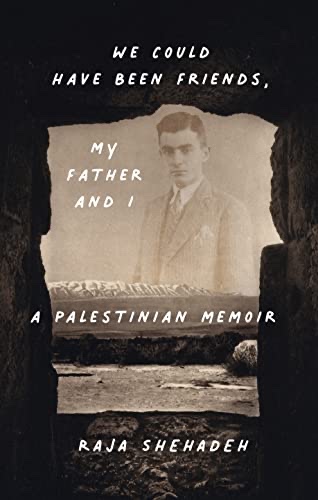
Finalist for the 2023 National Book Award, this is subtle psychological portrait of the author’s relationship with his father during the twentieth-century battle for Palestinian human rights. 
A young Palestinian named Usama returns to his homeland after several years working in the Gulf. Now an operative in the resistance movement, his mission is to blow up buses transporting Palestinian workers into Israel. But Palestine and its people are not as Usama remembered them. He is shocked to discover that many of his fellow countrymen have adjusted to life under military control. Despite mounting unease, Usama sets out to accomplish his objective … with disastrous consequences. First published in Palestine in 1976, Wild Thorns was the first Arab novel to offer a glimpse of everyday life under Israeli occupation. With uncompromising honesty, Khalifeh pleads elegantly for survival in the face of oppression
Thank you so much for reading.
Until the next post,
Gia
 G. Jacks Writes (About Everything)